Live events are experiencing unprecedented growth. Recent data shows that 74% of Fortune 1000 marketers plan to increase their experiential marketing budgets in 2025, with many companies allocating significant portions of total marketing spend to face-to-face activations. This surge in experiential marketing investment raises a critical question: who should represent your brand on the ground?
The choice between brand ambassadors and promotional models can significantly impact your campaign's success. While both serve as brand representatives, their roles, responsibilities, and return on investment differ substantially. This guide breaks down exactly what distinguishes these two types of event talent, when to use each, and how to maximize your staffing ROI.
Market Landscape & Key Statistics
The experiential marketing landscape continues to expand at remarkable rates. Companies now dedicate substantial portions of their marketing budgets to event marketing and face-to-face activations. This investment reflects proven returns, with experiential marketing consistently delivering strong ROI compared to traditional marketing channels.
The promotional staffing market has grown correspondingly. Industry research shows increasing promotional budgets across sectors, with many companies planning to boost event production in the coming year. This growth creates both opportunities and challenges for brands seeking the right talent.
Key market indicators include:
57% of B2C marketers and 55% of B2B marketers planning increased event production in 2025
Strong event marketing ROI across industries
Growing demand for specialized event talent across all sectors
Shift toward quality over quantity in staffing decisions
What Is a Brand Ambassador?
A brand ambassador serves as a long-term representative who embodies a company's values, personality, and mission. Unlike temporary event staff, ambassadors form ongoing partnerships with brands, often spanning months or years. They function as an authentic extension of the brand's presence across multiple channels.
Definition & Core Role
Brand ambassadors are individuals who promote brands through their personal credibility and authentic enthusiasm. They may be loyal customers, employees, influencers, or celebrities who genuinely connect with the brand's values. Their role extends far beyond single events, encompassing social media advocacy, content creation, and community building.
Channels of Influence
Ambassadors operate across diverse platforms:
Social Media: Creating and sharing branded content on personal channels
Live Events: Representing brands at conferences, product launches, and experiential activations
Content Creation: Producing blogs, videos, and testimonials
Community Engagement: Building relationships with customers and prospects
Key Traits and Skills
Successful brand ambassadors possess:
Deep product knowledge and genuine brand passion
Strong communication and storytelling abilities
Established credibility within their niche or industry
Consistent personal brand alignment with company values
Long-term commitment to brand representation
Real-World Examples
High-profile brand ambassadors include George Clooney for Nespresso and Beyoncé for Pepsi. These partnerships leverage celebrity credibility to build brand affinity over extended periods. At the micro-level, fitness influencers representing athletic wear brands or tech enthusiasts promoting software platforms demonstrate the ambassador model's scalability.
What Is a Promotional Model?
A promotional model is hired to create immediate consumer interest through direct interaction at specific events or campaigns. These professionals specialize in attracting attention, distributing information, and generating leads through their presence and engagement skills.
Definition & Core Role

Promotional models are event-specific brand representatives who use visual appeal and charisma to draw crowds and spark interest. They work primarily in live environments, making strong first impressions that drive immediate action rather than long-term relationships.
Typical Event Environments
Promotional models excel in high-traffic settings:
Trade Shows: Attracting booth visitors and qualifying leads
Product Samplings: Distributing samples and gathering feedback
Grand Openings: Creating excitement and driving foot traffic
Street Marketing: Engaging consumers in public spaces
Auto Shows: Showcasing vehicles and features
Key Traits and Skills
Effective promotional models demonstrate:
Strong visual presentation and professional appearance
Outgoing personality and approachability
Quick learning ability for product basics
Energy and enthusiasm throughout long events
Crowd engagement and traffic management skills
Real-World Examples
Consider an electronics retailer launching a new smartphone at mall kiosks. Promotional models draw shoppers to the display, demonstrate key features, and direct interested consumers to sales staff. Similarly, beverage brands use promotional models at festivals to distribute samples and create memorable brand interactions.
Side-by-Side Comparison: Ambassadors vs Promo Models
Understanding the distinctions between brand ambassadors and promotional models helps optimize your staffing decisions:
Scope & Duration
Brand Ambassadors: Engage in long-term partnerships lasting months or years. They participate in multiple campaigns and become integrated into overall marketing strategy.
Promotional Models: Work short-term assignments, typically single events or brief campaign periods. Their involvement is project-specific.
Engagement Depth
Brand Ambassadors: Build deep, meaningful relationships through informed conversations and authentic connections. They foster lasting brand loyalty.
Promotional Models: Create brief, impactful interactions focused on immediate interest and lead generation. They prioritize volume over depth.
Use of Personal Brand
Brand Ambassadors: Leverage their personal reputation, social following, and credibility to enhance brand perception. They often require exclusivity agreements.
Promotional Models: Represent only the company brand without using personal platforms or influence. No exclusivity typically required.
Visual Impact vs Storytelling
Brand Ambassadors: Focus on narrative and education, using communication skills to convey brand values and benefits.
Promotional Models: Emphasize visual appeal and immediate attraction, using presence to draw attention to products or booths.
Budget Range
Brand Ambassadors: Higher investment due to ongoing contracts, training, and potential exclusivity. Rates vary from $500-$5,000+ per activation depending on influence level.
Promotional Models: Lower per-event cost, typically $200-$500 per day. More cost-effective for single activations.
KPIs & Success Metrics
Brand Ambassadors: Measured by long-term metrics including social reach, content engagement, lead quality, and customer lifetime value.
Promotional Models: Evaluated on immediate results such as booth traffic, samples distributed, leads captured, and event-day conversions.
When to Use Brand Ambassadors

Brand ambassadors deliver maximum value in scenarios requiring depth, authenticity, and sustained engagement:
Multi-Month Product Roadshows
Extended campaigns benefit from ambassadors who can maintain consistent messaging and build relationships across multiple touchpoints. Their deep product knowledge allows them to handle complex questions and objections.
Community Building Events
When fostering brand communities or user groups, ambassadors create authentic connections that promotional models cannot replicate. Their genuine enthusiasm and expertise build trust among community members.
Education-Heavy Launches
Complex products requiring detailed explanation thrive with ambassador representation. B2B software demonstrations, technical product launches, and professional service introductions need knowledgeable advocates who can educate while engaging.
Influencer Integration
Brands seeking to tap into existing audiences benefit from ambassadors with established followings. These partnerships extend reach beyond event boundaries through social amplification.
When to Use Promotional Models
Promotional models excel in high-energy, high-traffic environments where immediate impact matters most:
Trade Shows & Expos
The competitive trade show environment demands attention-grabbing talent. Promotional models draw booth traffic, pre-qualify visitors, and ensure your investment generates maximum foot traffic.
Grand Openings & Street Marketing
Launch events and guerrilla marketing campaigns need energetic professionals who can create buzz quickly. Promotional models generate excitement and drive immediate participation.
Product Sampling Campaigns
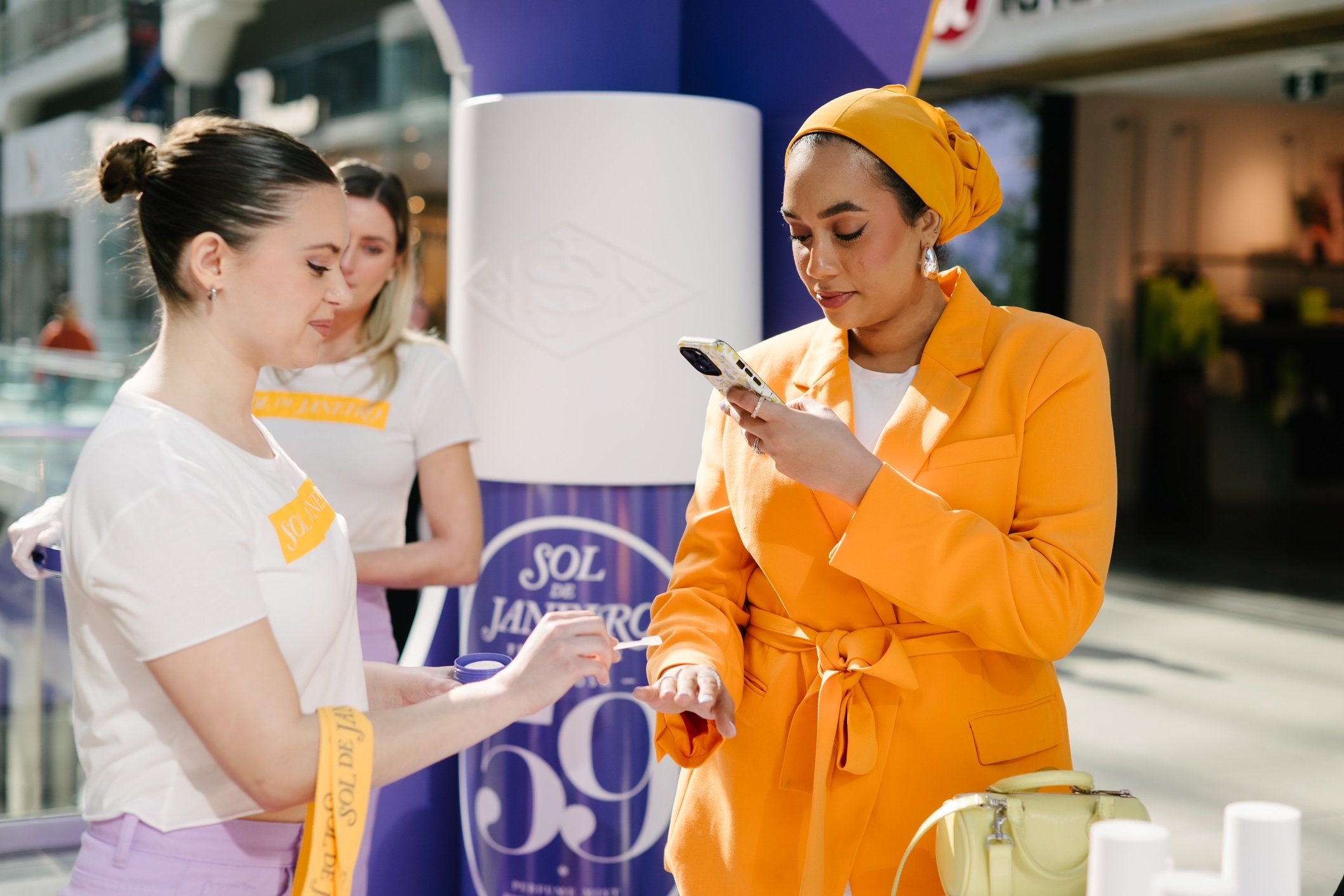
Distribution-focused events benefit from promotional models who can efficiently manage high-volume interactions while maintaining brand standards. They excel at quick engagements that leave positive impressions.
Seasonal Pop-Ups & Festivals
Time-limited activations at festivals, holiday markets, or seasonal events match perfectly with promotional model capabilities. Their ability to attract and engage large crowds maximizes limited-time opportunities.
Budget & ROI Analysis
Understanding the financial implications of each staffing choice ensures optimal resource allocation:
Typical Pay Structures
Brand Ambassadors:
Hourly rates: $50-$200 for micro-influencers
Per-post rates: $100-$10,000+ depending on reach
Monthly retainers: $1,000-$25,000 for ongoing partnerships
Performance bonuses based on lead quality or conversions
Promotional Models:
Hourly rates: $25-$75 for standard events
Day rates: $200-$500 for full-day activations
Premium rates for specialized skills or markets
Overtime considerations for extended events
Total Cost of Ownership
Factor these additional expenses into your budget:
Training: Ambassadors require 4-8 hours; models need 1-2 hours
Uniforms: $50-$200 per person depending on requirements
Travel: Local talent reduces costs significantly
Management: Agency fees typically 15-25% of talent costs
ROI Benchmarks
Industry data reveals compelling returns. Research shows that experiential marketing consistently outperforms traditional marketing channels, with well-executed programs delivering strong returns on investment. The key is matching the right talent type to your specific campaign objectives.
Break-Even Scenarios
Calculate your break-even point by considering average customer value and conversion rates. A brand ambassador costing $5,000 monthly needs to generate just 10 customers at $500 lifetime value to break even. Promotional models at $500 per event must drive 2-3 sales at similar values.
Hiring & Training Process
Success with either talent type requires strategic hiring and preparation:
Job Descriptions & Must-Have Skills

Create clear position profiles outlining:
Specific responsibilities and deliverables
Required experience and skills
Physical requirements (standing, lifting, travel)
Compensation structure and benefits
Performance expectations and KPIs
Interview Questions & Audition Tips
Evaluate candidates through role-specific assessments:
For Ambassadors: Test product knowledge retention, storytelling ability, and social media savvy
For Models: Assess crowd engagement skills, energy levels, and professional appearance
Conduct mock scenarios relevant to your events
Check references from similar campaigns
Onboarding & Product Training
Invest in comprehensive preparation:
Brand history and values alignment
Product features and competitive advantages
Target audience profiles and pain points
Objection handling and FAQ preparation
Technology platforms and reporting requirements
Legal Considerations
Protect your brand through proper documentation:
Exclusivity clauses preventing competitive conflicts
NDAs safeguarding proprietary information
Image rights for marketing use
Performance standards and termination clauses
Insurance requirements for event participation
Future Trends & Hybrid Roles

The event staffing landscape continues evolving with technology and consumer preferences:
Rise of Micro & Nano Ambassadors
Brands increasingly partner with micro-influencers (1,000-100,000 followers) who offer higher engagement rates and authentic connections. These ambassadors provide cost-effective reach within specific niches.
Virtual Promotional Models
Metaverse activations and virtual trade shows create new opportunities for digital brand representation. Virtual models can engage multiple prospects simultaneously across global markets.
Data-Driven Staffing Decisions
Advanced analytics enable precise talent matching based on audience demographics, past performance, and predictive modeling. Brands can optimize staffing investments through data-informed selection.
Hybrid Ambassador-Model Roles
The lines blur as brands seek versatile talent combining ambassador knowledge with model presentation skills. These hybrid professionals adapt to varied event requirements while maintaining consistent brand representation.
Mini Case Studies: Success in Action
Electronics Retailer Smartphone Launch
A major electronics retailer deployed promotional models for a flagship phone launch across 50 locations. Results included:
300% increase in demo participation versus unstaffed displays
45% of interactions converted to same-day purchases
$2.3M in attributed sales from $45,000 staffing investment
Key success factor: Models pre-qualified prospects before directing to sales staff
Sportswear Ambassador Program
An athletic apparel brand recruited 25 fitness influencer ambassadors for a year-long program:
Generated 4.2M organic social impressions monthly
Drove 15% increase in website traffic from ambassador content
Created 500+ pieces of authentic user-generated content
Achieved 8.2X ROI through direct sales and brand lift
B2B Software Ambassador Generating Qualified Leads
A SaaS company employed industry expert ambassadors at major conferences:
Captured 850 qualified leads across 6 events
Shortened sales cycle by 23% through ambassador pre-education
Converted 12% of leads to customers within 90 days
Generated $1.8M in pipeline value from $75,000 investment
Frequently Asked Questions
Do ambassadors always require exclusivity?
Not necessarily. While many brands prefer exclusive partnerships, some successful programs allow ambassadors to represent non-competing brands. Define exclusivity parameters clearly in contracts.
Can one person be both an ambassador and a promo model?
Yes, versatile talent often fills both roles for different brands or campaigns. However, ensure they understand the distinct requirements and can adapt their approach accordingly.
How far in advance should I book event staff?
For promotional models, book 2-4 weeks ahead for standard events, 6-8 weeks for large conventions. Brand ambassadors require 2-3 months lead time for proper onboarding and relationship building.
How do I measure success?
Track role-specific KPIs. For ambassadors, monitor social reach, content engagement, and long-term customer value. For promotional models, measure event traffic, lead capture, and immediate conversions.
Ready to elevate your next event? Book vetted Brand Ambassadors or Promotional Models today. Our nationwide roster delivers expertise, energy, and measurable ROI. Contact our staffing specialists now to lock in talent before your competition does.