According to EventTrack research, 85% of consumers are more likely to purchase after participating in a brand event, and 70% go on to become repeat customers. As digital advertising grows more ignorable, brands are discovering that physical, shareable experiences connect with audiences in ways paid media increasingly cannot.
Experiential marketing creates immersive, real-world interactions that forge emotional connections between brands and consumers. Rather than interrupting people with passive advertising, this approach transforms customers into active participants in your brand story. The result is measurable: deeper loyalty, stronger social amplification, and higher purchase intent that outlasts the event itself.
This guide examines 10 standout activations that generated real ROI, breaks down what made each one work, and provides a planning framework you can apply to your own campaigns. Whether you are executing your first activation or looking to sharpen an existing strategy, these case studies offer concrete blueprints, not just inspiration.
The Six Pillars of Great Experiential Marketing
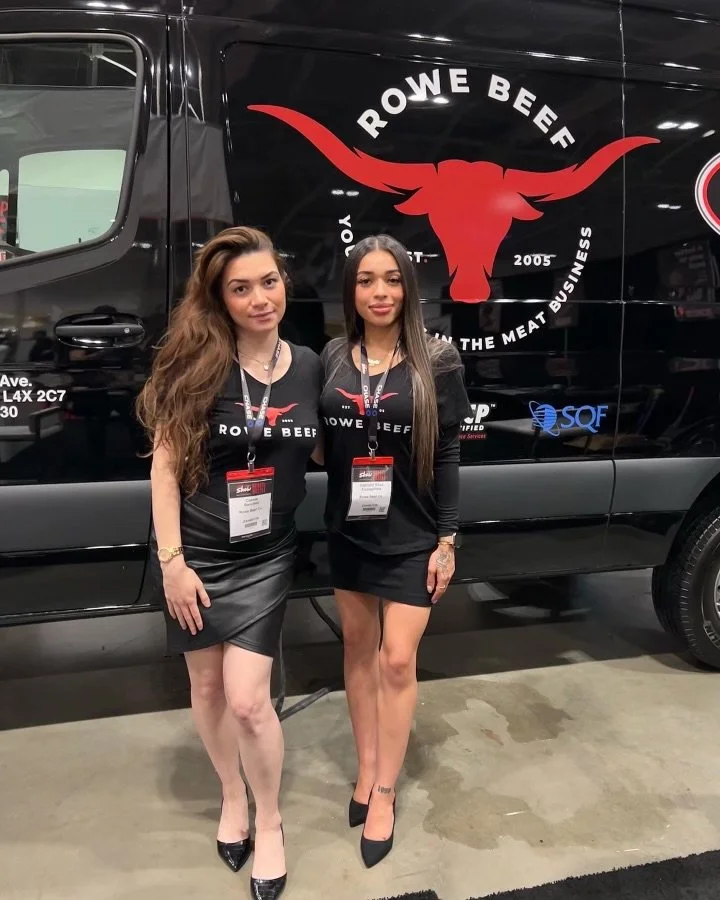
What separates memorable activations from forgettable ones comes down to six elements that appear, in some form, in every successful campaign.
1. Immersive, Multi-Sensory Engagement
Great experiential marketing engages multiple senses simultaneously. Harvard research confirms that engaging more sensory modalities during an experience creates richer memory encoding and stronger recall. When Emergen-C built their airport ASMR tunnel, they didn't just display their product. They piped in gentle popping sounds and berry-lemon scents, creating an environment travelers could feel and smell. That multisensory approach is why participants remembered it.
2. Authentic Brand Storytelling
Every element of your activation should reinforce your brand identity, not obscure it. Innovation should enhance, not overshadow, your core story. Consider how 818 Tequila's Coachella activation used an Old West saloon theme that matched both the desert setting and tequila's heritage: inventive in execution but genuinely rooted in the brand's DNA.
3. Emotional Connection
According to EventTrack data, 91% of consumers leave brand events with more positive feelings about the brand. This happens because in-person experiences create unscripted moments of joy, surprise, or wonder that no display ad can replicate. Red Bull's Stratos jump didn't just break records. It made millions of viewers feel part of something genuinely historic.
4. Shareability and Digital Integration
EventTrack reports that 98% of consumers create digital or social content at brand experiences and events. The most effective activations build shareability into the design rather than hoping for it organically. HBO's melting ice billboards included QR codes revealed as the ice thawed, bridging physical intrigue with digital engagement and turning every passerby into a potential distributor of campaign content.
5. Clear Brand Linkage
The most effective campaigns maintain an obvious connection to the brand throughout the experience. AARP's Rolling Stones tour activation let fans drum along to classic hits, then transitioned smoothly to messaging about music's brain health benefits. Entertainment with purpose reinforced AARP's mission rather than simply borrowing the concert's audience.
6. Measurable Impact
Experiential ROI goes beyond impressions. The best campaigns deliver quantifiable outcomes: increased sales, elevated brand sentiment, and lasting customer relationships. When 70% of participants become repeat customers after experiential campaigns, the business case becomes straightforward to defend.
Why Brands Invest in Experiential: The ROI Case
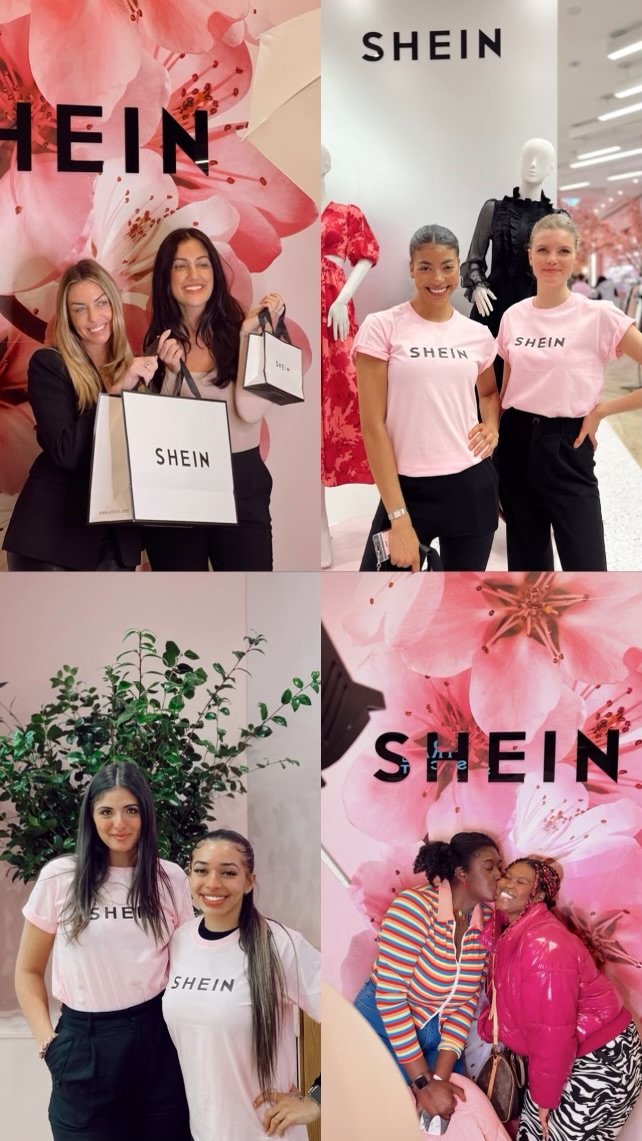
The numbers behind experiential marketing reflect sustained business impact. EventTrack data shows 85% of consumers are more likely to purchase after attending a live marketing event, and 91% leave with more positive feelings about the brand. Those sentiment shifts translate directly into downstream revenue.
Loyalty sees dramatic improvement as well. The same EventTrack research shows that 70% of event participants become repeat customers, a conversion rate that dwarfs what most digital channels achieve. WinSavvy analysis found that 93% of consumers say live events have a larger influence on them than television advertising.
Social amplification multiplies the organic reach of every dollar spent. Because 98% of attendees create and share content from brand experiences, each participant becomes a voluntary content creator. When Shipt activated at SXSW, half of all social content about their brand during the festival was user-generated: free, credible, peer-to-peer marketing from people who had chosen to share it.
Budget requirements vary widely, from guerrilla pop-ups under $50,000 to productions exceeding $1 million. The more meaningful comparison, however, is cost-per-engaged-customer. When you factor in the lifetime value of the 70% who become repeat buyers, experiential typically outperforms paid media on that metric. Content captured at events can also be repurposed for digital campaigns, adding further production value.
10 Standout Experiential Marketing Examples
1. Red Bull: "Stratos" Space Jump (2012)
In 2012, Red Bull sponsored Austrian skydiver Felix Baumgartner's freefall from the edge of space, at the time the highest such jump ever attempted. This was the most literal possible expression of Red Bull's "gives you wings" brand promise.
The live stream drew 8 million viewers concurrently on YouTube, setting a record that stood for years. Coverage ran in 50 countries. Marketingino reports the campaign generated an estimated $6 billion in equivalent advertising value. In the six months following the jump, Red Bull's US sales rose approximately 7%.
The Stratos example is now more than a decade old, which makes it useful precisely because the results are documented and auditable. Bold, on-brand spectacles that push genuine limits can deliver compounding brand equity long after the event itself.
Key result: ~$6B in estimated equivalent advertising value; 7% US sales increase in six months following.
2. The North Face: AR Campus Activation
Targeting back-to-campus shoppers, The North Face partnered with Snap to place a giant Borealis backpack atop the New York Public Library through Snapchat's landmark AR technology. The lens synchronized lighting with real-time sun position, creating a hyper-realistic effect that students could interact with and share from their phones without any additional hardware.
The campaign's TikTok post reached 2.1 million views. The activation demonstrated that even heritage outdoor brands can capture younger audiences through well-executed digital-physical integration, provided the technology genuinely serves the product story rather than existing for its own sake.
Key result: 2.1M TikTok views; strong Gen Z engagement during the back-to-campus purchase window.
3. Shipt: SXSW Guerrilla Pop-Up (2023)
At SXSW 2023, delivery service Shipt deployed "Cruizin' Coolers" and "Shopper Choppers": motorized shopping carts distributing free drinks and festival essentials throughout the event. By solving a real and immediate need (refreshments in a hot, crowded festival), the brand created organic goodwill rather than manufactured buzz.
The result: 50% of Shipt's SXSW social content came from user-generated posts, not the brand's own accounts. The activation reached over 4 million people organically and drove a 23% increase in app downloads during the festival week. Solving a genuine problem while surprising people with how you solve it remains one of the most reliable formulas in experiential marketing.
Key result: 4M+ organic reach; 23% app download increase during festival week; 50% of social content user-generated.
4. 818 Tequila: Coachella Outpost
818 Tequila transformed a corner of the Coachella festival grounds into a fully themed Old West saloon, complete with live music, craft cocktails, and partner activations from Bumble and Anastasia Beverly Hills. The environment matched both the desert setting and tequila's cultural heritage, making it feel like a natural extension of the festival rather than a brand intrusion.
The activation served over 25,000 cocktails and generated 3.2 million social impressions. The multi-brand partnership model is worth noting: splitting costs with complementary partners multiplied foot traffic for all involved while reducing individual budget burden.
Key result: 25,000+ cocktails served; 3.2M social impressions; multi-brand cost sharing reduced individual spend.
5. HBO: Frozen True Detective Billboards
To promote True Detective: Night Country, HBO erected giant ice blocks in Los Angeles and New York. As the ice melted over days, hidden objects and QR codes emerged, creating a time-sensitive mystery that matched the show's eerie, glacial tone perfectly. The progressive reveal gave passersby a reason to return, and the QR codes extended engagement into AR experiences online.
The LA billboard generated 90,000 impressions in a single day; New York delivered 242,500 over two days. Time-limited installations with built-in reveals are particularly efficient because urgency drives both repeat visits and social documentation. People don't want to miss what comes next.
Key result: 90K impressions (LA, day one); 242,500 impressions (NYC, two days).
6. FX: "Symphony of Screams" Booths
To promote the series Grotesquerie, FX installed interactive phone booths in three cities. Fans entered, screamed into handsets while lights flashed and volume meters measured their output. A music producer later mixed the recorded screams into an actual track, making every participant a genuine contributor to a creative deliverable.
Over 5,000 screams were recorded, generating 1.8 million social impressions from participant shares alone. The key insight here is that co-creation outperforms passive experience every time. When participants become contributors, their investment in sharing the outcome rises sharply.
Key result: 5,000+ screams recorded; 1.8M social impressions driven by participant shares.
7. Modelo: Personalized Trading Cards
During the College Football Playoffs, Modelo set up activation stations where fans took photos with branded props and received instant custom trading cards featuring their own image. The concept tapped directly into sports culture's existing relationship with collectibles, while the personalization made each card a genuinely individual keepsake.
Khris Digital data shows that personally relevant content drives stronger engagement, particularly among younger consumers. The activation produced over 15,000 personalized cards and drove 42% higher brand recall among participants: a strong indicator that the physical takeaway extended the brand experience well beyond the event itself.
Key result: 15,000+ cards produced; 42% higher brand recall among participants.
8. Emergen-C: Airport ASMR Tunnel
The Emergen-C Crystals Corridor at JFK Terminal 5 created a sensory installation for travelers moving through the airport. The tunnel played gentle popping sounds and released berry-lemon scents, simulating the sensory experience of their fizzy immune drink at a moment when travelers are actively seeking comfort and relief.
Location selection here is strategic, not incidental. Airports concentrate stressed, health-conscious consumers who are already thinking about immunity. The activation distributed over 50,000 samples and achieved a 73% retail redemption rate within 30 days: unusually high, and a direct result of catching the right audience at the right emotional moment.
Key result: 50,000+ samples distributed; 73% retail redemption rate within 30 days.
9. AARP: Rolling Stones Tour Activation
AARP's activation at Rolling Stones tour stops demonstrated that experiential marketing is not exclusively a young person's game. Interactive drum pads let concert-goers play along with classic Stones tracks, followed by messaging about music's documented benefits for brain health, connecting entertainment directly to AARP's health-focused mission in a way that felt earned rather than forced.
AARP members also received early ticket access, creating tangible, exclusive value beyond the activation itself. The campaign reached over 400,000 attendees across 15 shows and drove a 28% increase in membership inquiries. Audience-matched activity, clear brand linkage, and real member benefit: three elements that are replicable regardless of category.
Key result: 400,000+ attendees across 15 shows; 28% increase in membership inquiries.
10. Prada Beauty: Pop-Up Flower Market
During New York Fashion Week, Prada distributed 18,000 floral stems alongside 14,000 perfume samples from elegant street-level installations. The sensory connection between flowers and fragrance made the brand experience immediate and intuitive. Every participant left with both a photograph and a physical reminder of the brand, the stems, which extended the activation into their homes.
Luxury brands often struggle to create accessible experiences without diluting their positioning. The Prada flower market solved this by offering something beautiful and free, without any discount or democratization of the product itself. The activation generated over 5 million social impressions and drove a 57% sales increase for the featured fragrance.
Key result: 5M+ social impressions; 57% sales increase for featured fragrance; 18,000 stems and 14,000 samples distributed.
Key Takeaways and Best Practices
Clear patterns emerge from analyzing these campaigns. The difference between activations that convert and those that merely entertain usually comes down to the following.
Start with deep audience insight. Both Modelo's trading cards and The North Face's AR activation worked because the creative teams understood not just who their audience was, but what those people valued and how they spent their time. Demographics are a starting point; psychographics and behavioral habits are where the real strategy lives. Gen Z values personal relevance and shareability; older demographics respond to genuine value exchange and activities aligned with existing interests. Neither group is monolithic, and neither should be treated as one.
Design for shareability from the first brief. Every successful activation above produced content people wanted to share, not because they were prompted to, but because the experience itself was worth documenting. HBO's melting billboards and Prada's flower markets created moments of transformation and beauty that compelled sharing. Think beyond photo backdrops: build in surprise, progressive reveal, or co-creation, and the social content will follow.
Bridge physical and digital without forcing it. QR codes, AR filters, event-specific hashtags, and instant content delivery all extend engagement beyond the moment. The North Face's Snapchat lens and HBO's QR-code reveals are good models: the digital layer added genuine value to the physical experience rather than simply digitizing it. Plan your online and offline integration as a single system, not two separate workstreams.
Give people something to keep. Whether it is Emergen-C's samples, Modelo's personalized cards, 818 Tequila's cocktails, or Prada's flower stems, a tangible takeaway anchors the memory. It doesn't need to be expensive. It needs to be relevant and connected to the brand story.
Define success metrics before you build anything. Social reach, lead capture, sales lift, and sentiment improvement are all valid KPIs, but they measure different things and require different data architectures to track. Build measurement into the activation design from the start rather than retrofitting it afterward. The best campaigns tie every metric back to a specific business objective that was articulated before the first dollar was spent.
How to Plan Your Own Experiential Campaign
Set specific, measurable goals. "Increase engagement" is not a goal. "Generate 10,000 social shares and drive a 15% lift in app downloads among attendees aged 18-34" is. Your primary objective, whether brand awareness, lead generation, trial, or sales conversion, shapes every subsequent decision about format, location, and budget allocation. Include both immediate event metrics and lagging indicators like sales lift, which you will track weeks or months later.
Pressure-test your concept against the six pillars. Before committing to a concept, run it through the checklist: Does it engage multiple senses? Does it authentically represent the brand? Does it create a shareable moment? Is there a clear brand connection throughout? Can you measure its impact? Concepts that fail two or more of these tests rarely overcome those gaps in execution.
Build a realistic timeline and map every dependency. Work backwards from your event date. Large activations with custom production require six to eight months of lead time; standard pop-ups need three to four months minimum; even lean guerrilla activations require at least six to eight weeks once permits and safety reviews are factored in. Map every dependency: permits, insurance, vendor lead times, staffing. Build contingency time into the schedule, not just contingency budget.
Vet your vendors carefully. Experienced experiential vendors are not interchangeable with general event production companies. Review portfolios specifically for activations at a comparable scale and complexity. For technology components, budget time for testing well before the event date, AR, social integration, and data capture tools have a way of surfacing problems close to launch. Reserve 10–15% of your total budget for unexpected needs.
Take compliance seriously from the start. Permits, insurance, and safety protocols are not optional and should not be addressed at the end of the planning process. For guerrilla campaigns, in particular, legal review is essential before execution. A single safety or legal failure can transform genuine positive buzz into a reputational problem that outlasts the activation.
Measurement and Analytics
Establish pre-event benchmarks. Without baseline data on current brand sentiment, social following, sales figures, and relevant competitor positioning, you cannot credibly claim lift. Document these numbers before the activation begins. Including both quantitative metrics and qualitative measures, sentiment surveys and brand perception studies add important context that transaction data alone doesn't provide.
Build data capture into the experience itself. Modern event analytics tools make real-time measurement possible without disrupting the participant experience. QR codes track individual interactions. Tablet-based feedback collection works well at natural exit points. Social hashtags aggregate organic sharing. The key principle is that data capture should feel like a natural part of the activation, Shipt's SXSW activation is a clean example, where the social sharing that generated their data was also the thing participants wanted to do anyway.
Monitor social sentiment in real time. Volume is not the only signal worth tracking. Tools like Brandwatch or Sprout Social surface sentiment alongside share counts, revealing whether people are sharing because they are genuinely enthusiastic or simply documenting something strange. Quality of engagement matters as much as quantity, and real-time monitoring lets you respond to emerging narratives while the activation is still live.
Connect post-event data to your CRM. The full picture of ROI typically requires weeks or months to emerge. Track participants through your sales funnel and compare their purchase behavior against a control group of non-attendees. Connect email captures to long-term customer value analysis. The brands that measure experiential most rigorously tend to invest in it most confidently, because the data consistently justifies the spend.
Common Pitfalls to Avoid
Concept without brand alignment. The most technically impressive activation fails if it doesn't reinforce your brand story. A financial services company borrowing extreme sports aesthetics because it worked for Red Bull will confuse its audience rather than inspire them. Every creative decision should be traceable back to the brand's core identity. When in doubt, choose authentic over novel.
Underestimating logistics. Long queues, technical failures, and understaffing convert potential advocates into detractors faster than almost any other variable. Plan for peak-capacity attendance, not average flow. Bring more staff than you think you need. Develop specific contingency plans for the failures most likely to occur in your format: weather, connectivity outages, equipment breakdowns, and crowd management. These scenarios are not hypothetical. They happen at a meaningful percentage of activations.
Outdoor and connectivity blind spots. Outdoor activations need weather contingency plans beyond optimism. Covered areas, weatherproof equipment, and pared-back rain-day versions of the experience should all be documented before the event. For technology-dependent activations, never rely on venue WiFi as your primary connection. Test all connectivity on-site before the event and bring redundant infrastructure.
Letting momentum die after the event ends. The experience doesn't conclude when participants leave. Without structured follow-up, initial enthusiasm fades within days. Before the activation launches, plan your post-event engagement sequence: email follow-up, exclusive content or offers for participants, user-generated content galleries, and community-building touchpoints. Converting momentary excitement into lasting customer relationships is where experiential marketing earns its long-term ROI.
FAQ: Experiential Marketing Essentials
How much does an experiential campaign typically cost?
Investment ranges from roughly $25,000 for a simple pop-up to over $1 million for elaborate, multi-city productions. Most brand activations fall between $75,000 and $250,000. How long should an activation run?
Which industries see the strongest results?
Any brand with a strong visual or sensory dimension tends to do well: fashion and beauty, food and beverage, consumer technology, automotive, and entertainment all benefit from letting people interact directly with what they're buying. That said, 79% of marketers across categories now consider experiential a core part of their strategy, and B2B brands increasingly use it for lead generation and relationship-building at trade shows and corporate events. The format is more category-agnostic than its reputation suggests.
How do you prove ROI to leadership?
Build your business case on three time horizons: immediate (attendance, samples distributed, social reach), short-term (lead quality, sales lift in the weeks following), and long-term (customer lifetime value, brand sentiment change). Compare cost-per-acquisition against your other channels. Document the earned media value of coverage and user-generated content. Tie every metric back to the business objectives you defined before the activation launched, which is why setting those objectives clearly at the outset is the single most important planning decision you will make.
Conclusion
The shift from passive advertising to active brand participation is not a trend, it reflects a durable change in how consumers expect to engage with brands. The 10 activations in this guide demonstrate that when experiential marketing is executed with clear strategic intent, it delivers business outcomes that justify its investment. They also reveal a consistent logic: the campaigns that work hardest for the brand are the ones that work hardest for the participant first.
The six pillars, immersive engagement, authentic storytelling, emotional connection, built-in shareability, clear brand linkage, and measurable impact, are not a checklist to complete. They are a lens for making better decisions at every stage of planning and execution. Brands that internalize them consistently produce activations that earn both short-term results and long-term brand equity.
The next step is applying these principles to your specific context: your audience, your brand, your objectives, and your budget. The framework above gives you the structure to do that. The case studies give you proof that it works.
Ready to plan your next activation? Book a free 30-minute strategy call with our brand activation experts and join the brands turning single events into lasting customer relationships.