Experiential Marketing Trends 2026: Top 5 Insights & Implementation Guide
The experiential marketing landscape is undergoing a meaningful transformation. PQ Media forecast that worldwide spending reached $128.3 billion in 2024, surpassing pre-pandemic levels for the first time. This resurgence is not just recovery; it represents a fundamental shift in how brands allocate attention and budget. EventTrack research that 74% of Fortune 1000 marketers planned to increase their experiential budgets in 2025, with investment momentum continuing into 2026.
The underlying driver is straightforward: EventTrack data, and 91% leave with more positive feelings about the brand. As digital advertising becomes easier to skip and harder to trust, physical experiences that engage people directly have become one of the few reliable ways to build a genuine brand connection.
The post-pandemic era has intensified this dynamic. After years of screen-based interaction, audiences place a higher premium on in-person, sensory-rich moments. When brands deliver genuinely immersive activations, they capture attention that has become almost impossible to hold online. Five trends are shaping how forward-thinking brands approach this opportunity as we move through 2026.
Trend 1: Hyper-Immersive Storytelling and Technology

The era of passive brand experiences is closing. Today's most effective activations blur the boundaries between physical and digital, creating environments where every interaction deepens brand connection rather than simply broadcasting a message. This shift represents more than technological novelty it is a wholesale reimagining of what brand storytelling can do.
Augmented and mixed reality experiences have moved from gimmick to genuine narrative tool. Leading brands now deploy AR environments where physical spaces become interactive storyworlds. Projection mapping covers entire building facades. Spatial audio systems create three-dimensional soundscapes. These technologies, used well, serve the story rather than existing to demonstrate the technology itself.
Nike's House of Innovation flagship stores offer a useful illustration of this approach at scale. Motion-activated displays respond to customer presence, AR mirrors allow virtual customization, and app-enabled interactions create a continuous loop between digital profile and physical product. The stores function as three-dimensional brand narratives where every surface and interaction point advances the story. Research by Zappar found that AR experiences produce 70% higher memory encoding compared to non-AR equivalents, a meaningful indicator of why immersive technology is earning its place in brand activation budgets.
Immersive physical design has evolved accordingly. Event and retail environments are increasingly conceived as architectural brand statements, spaces where every surface, material, and sensory cue contributes to a coherent narrative. These aren't venues that house an experience; they are the experience.
What the data shows: Experiential marketing events produce a higher brand recall compared to traditional advertising. AR specifically drives 70% higher memory encoding, according to NeuroInsight neuroscience research.
The implementation principle worth internalizing: technology should serve the story, not substitute for it. Every technical element, projection, sensor, spatial audio, and AI content engines should exist because it deepens the human experience, not because it demonstrates capability. Brands that lead with emotional resonance and use technology to amplify it consistently outperform those that lead with the technology itself.
Implementation essentials for Trend 1
Successful hyper-immersive experiences typically layer base environmental design, establishing the narrative, dynamic projection, and sensor systems creating responsive visual landscapes, and AI content engines personalizing experiences in real time. The key is ensuring all components work in concert, which requires integration planning from the first brief, not the final production week.
Trend 2: AI-Driven Personalization at Scale
Artificial intelligence is changing the fundamental architecture of large-scale brand events. Where activations once offered a single experience to everyone who attended, AI now enables genuine micro-personalization, making individual visitors feel the experience was designed for them, at an event serving thousands simultaneously.
The process begins before anyone arrives. AI systems analyze registration data, social media signals, and behavioral patterns to build visitor profiles. Those profiles inform pre-event communications, on-site journey mapping, and even real-time content display, creating a coherent personalized thread from first touchpoint to post-event follow-up.
At the event itself, RFID and Bluetooth-enabled badge analytics track movement patterns with high precision. AI algorithms process this data in real time, identifying bottlenecks, predicting crowd flows, and dynamically adjusting experiences to maintain engagement. Computer vision systems add another layer: cameras gauge aggregate crowd energy and feed that data into systems that adjust music, lighting, and environmental factors to maintain optimal atmosphere, all without identifying individuals.
Content personalization is where AI's impact becomes most visible to attendees. Digital displays throughout event spaces serve dynamically generated content based on approaching visitors' profiles. A senior marketing executive sees different messaging than a product manager. International attendees receive culturally adapted communications. These adjustments happen without friction or delay, making the experience feel intuitive.
What the data shows: AmEx research, according to American Express Meetings and Events. AI-driven personalization consistently improves lead quality scores, attendee satisfaction, and post-event engagement with brands, reporting meaningful gains across all three measures in early deployments.
The privacy dimension matters here and should be addressed directly in planning. Effective AI personalization does not require tracking individuals invasively. Aggregate behavioral data, opt-in profile sharing, and anonymous environmental sensing can deliver significant personalization benefits while maintaining attendee trust. Events that are transparent about how data is used tend to see higher opt-in rates than those that obscure it.
Implementation essentials for Trend 2
Successful AI deployments combine predictive analytics platforms for pre-event planning and real-time adjustments, natural language processing for conversational interfaces and sentiment analysis, computer vision for anonymous crowd monitoring, and recommendation engines for personalized content. Privacy compliance architecture should be built from the ground up, not retrofitted after the system is designed.
Trend 3: Hybrid and Content-First Experiences
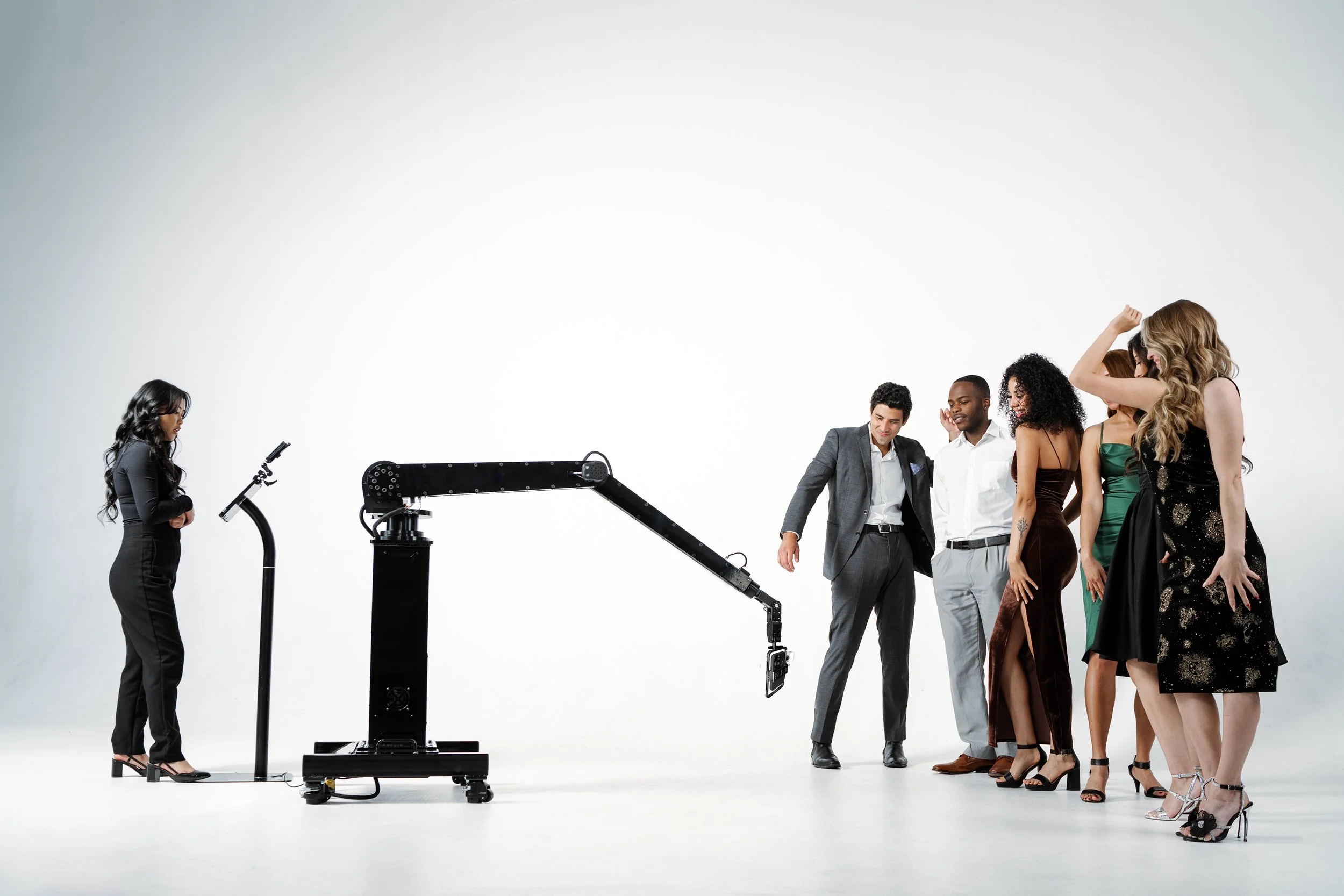
The most consequential shift in experiential marketing over the past several years is not a technology. It is a philosophy: every activation is now a content engine, and the physical event is the production. Brands that have internalized this generate months of engagement from a single activation. Those that haven't treat content as an afterthought and wonder why their events disappear from social feeds within 48 hours.
The "capture once, activate everywhere" approach drives modern experience design. Rather than treating events as discrete moments, effective brands architect every element for multi-channel distribution from the first brief. This means dedicated creator zones with professional lighting, clean backdrops, and equipment access where attendees and influencers can produce share-worthy content easily. It means live stream components that go beyond simple webcasting, layering main stage broadcasts, behind-the-scenes footage, attendee perspectives, and expert commentary into rich, explorable narratives.
EventTrack data shows that 98% of consumers create digital or social content at brand experiences. The question is not whether content will be created; it is whether the activation was designed to make that content excellent. On-site creator studios staffed by professional photographers and editors, visible to other attendees, have become a standard feature of sophisticated activations. The aspirational quality of watching content get made in real time raises the perceived value of the content that participants themselves produce.
What the data shows: Events designed with content creation as a primary objective consistently generate significantly more social impressions, higher attendee satisfaction, and longer engagement cycles than those that treat content as secondary. The content produced extends the activation's impact for weeks or months after the physical event ends.
The always-on strategy extends the event timeline in both directions. Pre-event teasers build anticipation and prime social audiences. Real-time coverage drives engagement during the activation. Post-event content highlights, behind-the-scenes footage, and attendee-generated stories sustain the narrative and feed the brand's content calendar for months. A single well-designed activation can generate enough content to anchor an entire quarter of social programming.
Hybrid participation has become a baseline expectation rather than a premium add-on. Remote audiences want to feel present, not just observe. Low-latency streaming, interactive polling, and synchronized reveals for distributed viewers transform a single-city event into a global brand moment. The technology infrastructure for this has matured considerably; the barrier now is design intention, not technical capability.
Implementation essentials for Trend 3
Content strategists should sit alongside experience designers from the first planning session. Build a content calendar for post-event distribution before the event launches. Assign a dedicated social media team to operate as a real-time newsroom during the activation, curating, editing, and amplifying the best attendee content as it is created, not hours later.
Trend 4: Values-Driven, Sustainable Activations
Sustainability has shifted from a differentiator to a baseline expectation. Audiences, particularly younger demographics, scrutinize brand environmental claims and have a well-developed instinct for the difference between genuine commitment and eco-friendly positioning. Empty gestures are recognized quickly and criticized publicly. Brands that treat sustainability as a communications strategy rather than an operational one tend to generate the most damaging responses.
The good news is that authentic sustainability investment also delivers operational benefits. EIC research found that implementing sustainable event practices produces a 20–30% reduction in costs and a 60–80% reduction in waste over time, making the business case straightforward once the upfront investment in systems and processes is made.
Modular exhibit and event infrastructure has transformed what sustainability means in practice. Modern modular systems recyclable aluminum frames, tension fabric graphics, and LED lighting, can exceed custom single-use builds in visual impact while dramatically reducing material waste across multiple deployments. The calculus changes when you evaluate cost and environmental impact across three or four activations rather than just one.
DEI design principles are increasingly inseparable from sustainability in event planning. Accessible pathways and experiences, multilingual support, diverse vendor partnerships, and culturally sensitive experience design reflect a broadened understanding of what responsible event production means. Events that make inclusion operational, not just aspirational, report stronger attendee satisfaction and more positive brand associations across all demographic segments.
What the data shows: EventTrack 2025, according to EventTrack 2025, while only 24% of B2C marketers currently have a sustainability action plan. That gap represents both risk for brands that ignore it and a genuine competitive opportunity for those who close it.
Zero-waste catering, carbon tracking platforms, and local vendor networks have all matured to the point where implementation is operationally straightforward for brands willing to commit. The honest planning question that drives better decisions, one worth asking at every activation brief, is: what happens to all of this after the show ends?
Implementation essentials for Trend 4
Sustainability planning belongs in the first brief, not the production checklist. Key commitments include venue selection prioritizing certified sustainable facilities, material specifications requiring recyclable or reusable options, transportation planning that actively encourages low-emission options, and impact measurement tools that generate post-event sustainability reports. Genuine reporting, including areas for improvement, builds more credibility than polished sustainability messaging alone.
Trend 5: Interactive Community and Wellness Focus

The most durable shift in attendee expectations is the move from passive consumption to active participation. People connect more deeply with experiences they help shape, and the data reflects this clearly. Activations that give attendees genuine creative agency consistently outperform passive equivalents on dwell time, content creation, and brand affinity measures.
Gamification has evolved well beyond prize wheels and leaderboards. Sophisticated implementations weave game mechanics throughout the entire experience journey: collaborative challenges, blockchain-verified participation records, peer-to-peer skill exchange, and participation that unlocks access to exclusive content or experiences. The goal is not to make an event feel like a game but to make participation feel meaningful and consequential.
Co-creation activations live art walls where attendees collaborate on large-format work, DIY stations producing customized products, participatory performances where the audience shapes the outcome blur the line between attendee and contributor. This distinction matters because contributors share their work. Attendees document it. The difference in organic social amplification is significant, and EventTrack data, the quality and shareability of co-created output is one of the highest-leverage design decisions a brand can make.
Wellness integration has matured from token yoga sessions to a genuine design philosophy. The recognition driving this shift is practical: cognitive performance, emotional state, and physical comfort directly affect how people experience and remember events. Biophilic design elements, circadian lighting systems, quiet zones with genuine noise reduction, movement-encouraging layouts, and nutrition-conscious catering all contribute to attendees leaving an event feeling energized rather than depleted. That distinction shapes every metric that follows, including whether they tell other people about it.
What the data shows: EventTrack data after experiential participation. Activations with strong community and co-creation elements consistently produce higher dwell time, more social sharing, and better return attendance rates than passive equivalents.
Accessibility by design deserves specific emphasis. Universal design, multiple participation modes, sensory-friendly options, real-time captioning, flexible timing, and clear wayfinding is not simply a compliance matter. It is the clearest operational expression of a brand's stated commitment to inclusion. Events that implement it well report broader and more positive media coverage, stronger attendee satisfaction across all segments, and genuine goodwill that passive messaging cannot replicate.
Influencer co-creation has also shifted in this direction. Brands increasingly involve influencers as experience architects rather than distribution channels, including them in pre-event design sessions, giving them dedicated production support during the activation, and building influencer-led zones that generate content with genuine creative credibility. The result is content that audiences trust more, because the influencer's involvement is real rather than transactional.
Implementation essentials for Trend 5
Begin with journey mapping that identifies where stress and energy drain currently occur in your event format. Design varied participation modes to accommodate different engagement styles. Build in structured recovery time, quiet spaces, lower-stimulus zones, and natural pacing. Extend the community beyond the physical event with platforms that maintain attendee connections in the weeks that follow. Feedback loops allowing real-time experience adjustments during the activation itself are increasingly standard practice.
How to Implement These Trends: A Practical Framework
Translating these trends into operational reality requires a systematic approach that balances creative ambition with execution discipline. Start by anchoring every decision in specific business objectives, not a general desire to be innovative.
Align goals to trends deliberately. AI personalization serves to lead quality and conversion. Hybrid approaches maximize reach. Sustainability investment addresses brand perception and retention. Community features build loyalty. These are not interchangeable. The trends worth prioritizing are those that map directly to your most important business objectives for the year.
Partner selection is a strategic decision. The complexity of modern experiential demands specialized expertise across multiple domains, technology partners with proven AR and AI deployment experience, production teams skilled in both physical and digital creation, content specialists with multi-channel distribution knowledge, sustainability consultants, and data analysts capable of real-time insight generation. Generalist event production firms increasingly cannot cover this range. Evaluate vendor portfolios specifically for activations at a comparable scale and complexity to your own.
Think in systems, not objects. Modular experience design component libraries of lighting rigs, display systems, and interactive elements that reconfigure across venues, reduce costs and environmental footprint while maintaining brand consistency. Brands that build reusable experience infrastructure get better economics dramatically on their third and fourth activations than on their first.
Invest appropriately in emerging technology. Industry benchmarks suggest dedicating 15–20% of experiential budgets to new technology and approaches. Consider phased rollouts: pilot at smaller events before deploying at flagship activations. This approach builds internal capability and reduces the risk of a high-stakes technical failure in front of your most important audience.
Measure what matters, not just what's easy. Traditional metrics attendance and booth traffic, tell incomplete stories. Modern experiential measurement should track engagement depth (dwell time, interaction frequency, content creation rate), emotional resonance (sentiment analysis, post-event surveys), content velocity (sharing rates, reach multiplication), behavioral change (post-event actions, community participation), and business impact (pipeline influence, sales velocity, customer lifetime value shifts). Connect your event data architecture to your CRM from the start, not as an afterthought when you need to justify the investment.
Plan post-event amplification before the event launches. Develop content calendars for distributing event assets across channels over the following weeks. Build nurture campaigns that personalize follow-up based on specific engagement patterns observed during the activation. Create community platforms that maintain attendee connections between events. Case study development demonstrating program impact serves both internal advocacy and external positioning. The brands that extract the most value from experiential marketing treat each activation as the beginning of a sustained engagement cycle, not a self-contained moment.
The Road Ahead: 2027 and Beyond
The five trends above represent where the most sophisticated brands are investing now. But early signals already point toward capabilities that will reshape the landscape in the 2027–2028 timeframe.
Holographic interaction technology is approaching commercial viability. Several major technology companies have active development programs for systems that would allow remote participants to appear as life-sized three-dimensional presences at physical events, fundamentally redefining what hybrid means. Digital twin technology is emerging in parallel: persistent virtual versions of physical activations that allow year-round engagement with experiences that previously existed for days.
Deeper physical-digital convergence will continue. As attribution technology matures, the direct connection between experiential marketing and downstream revenue will become measurable with greater precision, which will accelerate investment further. Brands establishing strong experiential capabilities now will have meaningful advantages over those that wait.
The most important near-term step is to begin. The lead times for well-executed experiential programs mean that brands starting their planning now will run better activations meaningfully in 2026 than those who begin when the trends feel fully mature. By that point, the early movers will already be iterating on their second generation.
Transform Your Brand Experiences in 2026
Ready to translate these trends into a concrete activation strategy? Schedule a free strategy call with our experiential experts. We'll assess your current approach, identify the highest-leverage opportunities given your objectives, and develop a customized roadmap for 2026. Our team has implemented cutting-edge activations for Fortune 500 brands and fast-growing challengers across every major category.